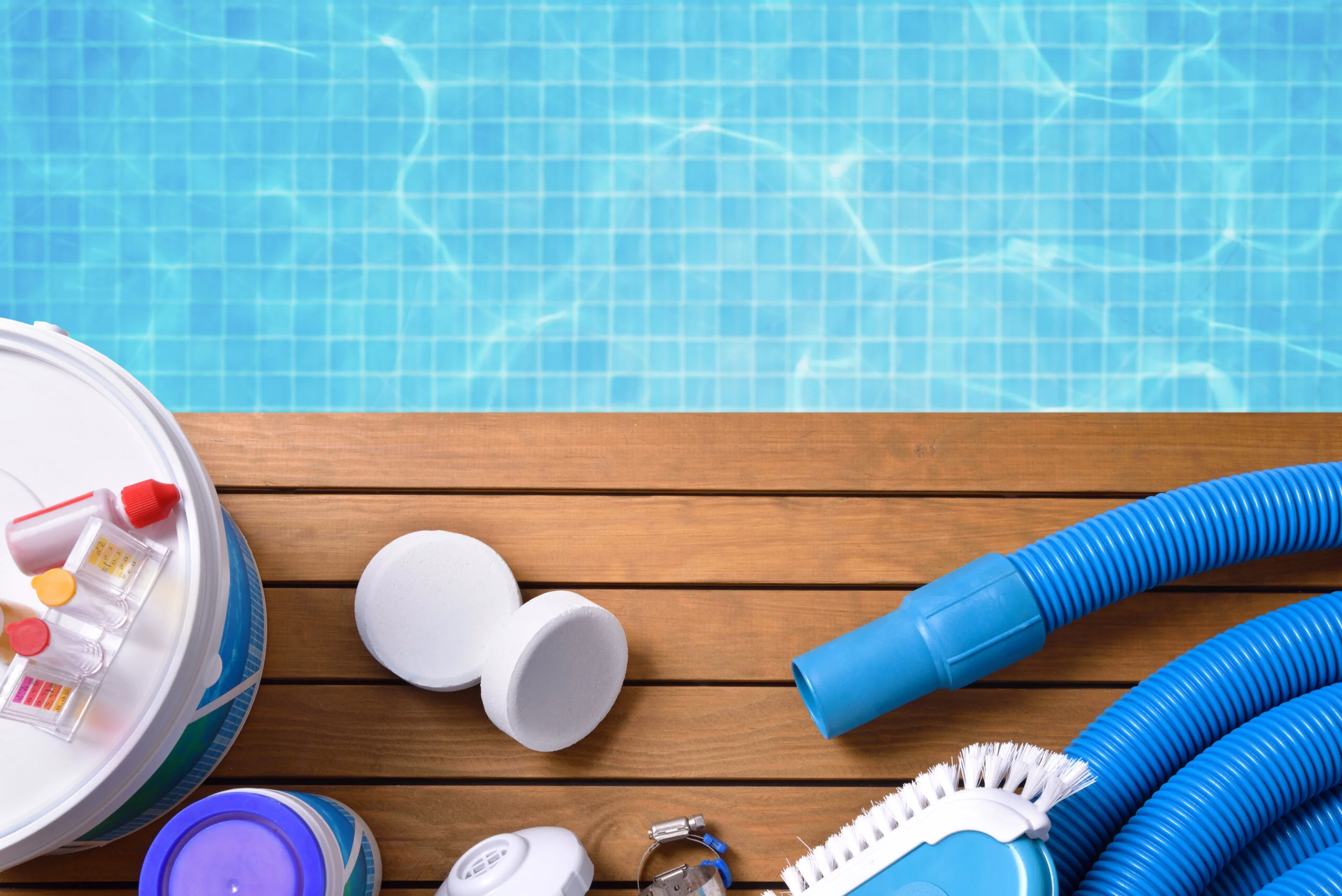
Owning a swimming pool is one of the best things about living in a warm climate. but keeping it clean, safe, and looking great requires a consistent routine. Whether you manage your pool yourself or work with a professional, understanding the basics will save you time, money, and a lot of frustration down the road.
Pool Chemicals: What You Need and Why
Chemicals are the foundation of any clean swimming pool. Without the right balance, no amount of cleaning will keep your water safe and clear. Here are the essentials every pool owner should keep on hand.
The most essential pool chemical. Sanitizes water by killing bacteria, viruses, and algae. Available as tablets, granules, or liquid.
Keep your water in the 7.3–7.6 range where chlorine works best. Use pH increaser or decreaser (muriatic acid) as needed.
A heavy chlorine dose to knock out algae or recover your water after heavy use, a rainstorm, or a chemical imbalance.
Acts as a preventative barrier against algae growth between treatments. Best used consistently, not reactively.
Especially important if your pool is surrounded by trees. Decomposing leaves raise phosphate levels, which feeds algae growth.
The Tools Every Pool Owner Should Have
The right tools make pool maintenance faster and more effective. These are the essentials worth investing in from day one.
- Telescopic Pole. The backbone of most cleaning tasks. Connects to skimmer nets, brushes, and vacuums so you can reach every corner of your pool.
- Skimmer Net. Removes leaves and debris from the surface before they sink and start breaking down in the water.
- Pool Brush. Scrubs the walls and floor to prevent algae from taking hold and stops calcium buildup over time. Consistent brushing is one of the simplest ways to protect your plaster.
- Pool Vacuum. Manual or automatic. Cleans debris and dirt settled on the floor that your filter alone cannot handle.
Water that is too acidic slowly eats away at plaster. Water that is too alkaline causes scaling and discoloration. Consistent brushing paired with balanced chemistry is what keeps your plaster looking great for years.
Water Testing: You Cannot Manage What You Cannot Measure
A reliable water testing kit is just as important as any chemical or tool. Testing two to three times a week gives you an accurate picture of where your chemistry stands so you can make small adjustments before they turn into bigger problems.
At minimum, your routine should cover pH, chlorine levels, total alkalinity, and phosphates. Small corrections made early are far easier and cheaper than recovering a pool that has gone green.
Filter Maintenance and Pump Runtime
Your filter is one of the hardest-working parts of your pool system. Whether you have a sand, DE, or cartridge filter, the principle is the same: a clean filter means better water circulation and cleaner water overall. Neglecting your filter puts strain on your pump and reduces the effectiveness of your chemicals.
Keep an eye on your pressure gauge and clean the filter when pressure rises 8 to 10 PSI above its normal baseline.
Run your pump at least 8 hours a day to keep water fully circulated and filtered. Stagnant water is much harder to balance and gives algae exactly the conditions it needs to thrive.
Consistency Is Everything
Staying consistent with chemicals, testing, brushing, and filter care is what separates a pool that always looks inviting from one that constantly battles algae, cloudy water, and equipment problems.
If the routine ever feels overwhelming, or your pool is giving you trouble that basic maintenance is not solving, a professional pool maintenance service can step in, assess the situation, and get everything back on track. The goal is always the same: clean water, healthy chemistry, and a pool that you actually want to use.
See Our Maintenance Service