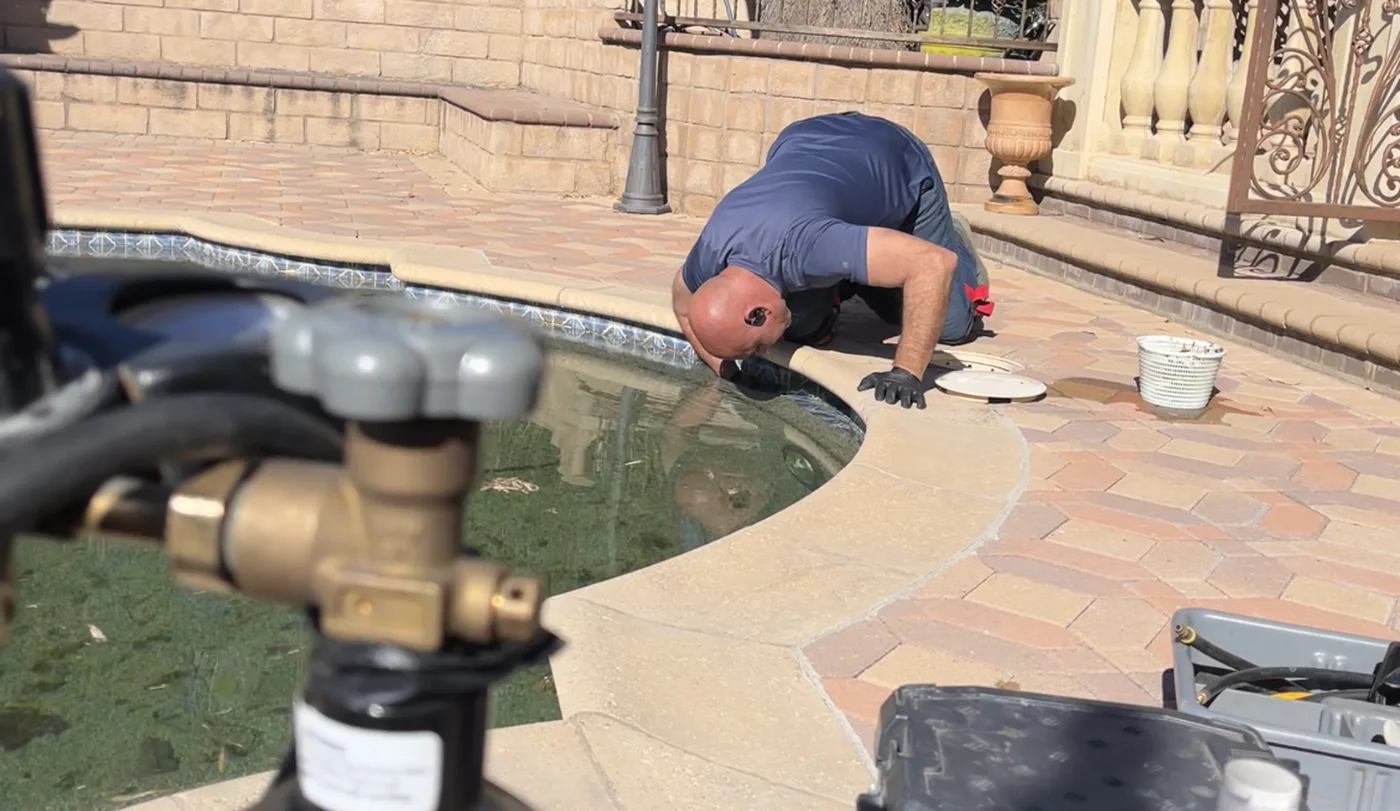
A leaking pool doesn't always announce itself. Sometimes it's obvious, a visible crack or a puddle forming nearby, but often the signs are subtle enough that homeowners don't notice until the water bill shows up. Knowing what to look for, and how to test it yourself, can save you money and catch a problem before it gets worse.
Your Water Bill Is Rising for No Clear Reason
This is usually the first sign people notice. If your water bill has crept up and you haven't changed how you use your pool, that's worth paying attention to.
Pools naturally lose some water to evaporation, but a leak loses water at a rate evaporation can't explain, and it shows up directly in your bill over a month or two.
You're Adding Water More Often Than Usual
If you've noticed yourself topping off the pool more frequently than normal, that's another early indicator. Every pool loses a small amount of water over time, but if you're adding water noticeably more often than you used to, especially outside of peak summer heat, it's a sign something beyond normal evaporation is going on.
The Bucket Test
This is the simplest way to check whether water loss is from evaporation or an actual leak.
Set the bucket in the pool
Fill a bucket with pool water and place it on a step in the pool, so the water level inside the bucket matches the pool's water level.
Mark both water lines
Mark the water line on both the inside and the outside of the bucket.
Wait 24 hours
Leave everything undisturbed for a full day so both levels have time to change.
Compare the two lines
Check how far each level dropped and compare them against each other.
If the pool's water level dropped significantly more than the level inside the bucket, that's a strong sign you have a leak rather than normal evaporation, since both should lose water at roughly the same rate from evaporation alone.
The Dye Test
If you suspect the leak is coming from a specific spot, like a crack, a light fixture, or a fitting, a dye test can help pinpoint it.
With the pump off and the water still, place a small amount of dye near the suspected area. If there's a leak, the dye will get pulled toward it as water escapes.
This works best for visible cracks or suspected spots around fittings and lights, rather than leaks hidden in underground plumbing.
When to Call In Professional Leak Detection
The bucket and dye tests are useful for confirming that a leak exists, but they won't tell you everything, especially if the leak is in the plumbing, the pool shell, or somewhere underground.
Professional pool leak detection uses specialized equipment to pinpoint exactly where water is escaping, which saves time and prevents unnecessary digging or guesswork.
If you've noticed a rising water bill, you're adding water more than usual, or your bucket test confirmed a leak, it's time to get it looked at properly. The longer a leak goes untreated, the more water and money it costs, and in some cases it can lead to structural damage around the pool.
If you think your pool has a leak, give GK Swimming Pools a call. We provide pool leak detection and repair throughout the San Fernando Valley and Santa Clarita area, and we'll help you find the source and get it fixed.