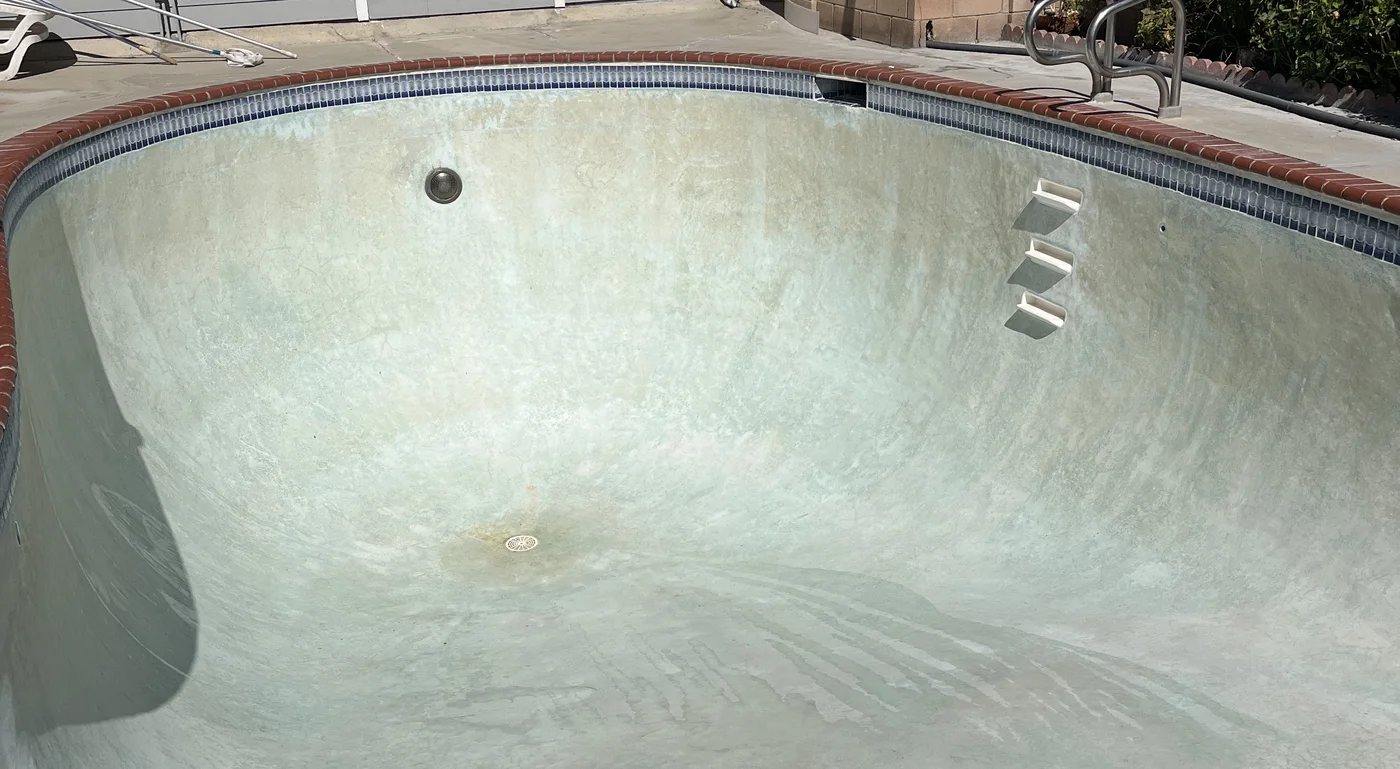
If your pool surface looks dull, stained, or discolored no matter how much you brush it, an acid wash might be what it needs. It's one of the most dramatic things you can do for an aging pool without replastering it, but it isn't the right answer for every pool, and it's not a job to take on yourself.
What an Acid Wash Actually Does
An acid wash strips away a very thin top layer of your pool's plaster to expose clean material underneath. The pool gets drained completely, a diluted acid solution is applied section by section, the surface is scrubbed, and everything is neutralized before the water is pumped out.
The result is a surface that looks close to new. Stains that no amount of brushing would touch come off with the layer of plaster they were embedded in. It's the difference between cleaning a surface and resurfacing it.
That's also the catch. You only have so much plaster to give. Every acid wash uses some of it up.
Do I Need to Acid Wash My Pool?
Here's what tells you a pool has passed the point where regular cleaning will help.
- Stains that stay put after brushing and balanced water chemistry
- Plaster that looks permanently dull, gray, or blotchy instead of bright
- A distinct waterline ring that won't scrub away
- Rust-colored, greenish, or brown discoloration set into the surface
- The pool sat green, empty, or untreated for weeks or months
- Mineral scaling that resists normal chemical treatment
One of these on its own might just mean your chemistry needs attention. Several together usually means the staining has worked into the plaster itself, and only removing that layer will fix it.
Acid Wash or Replaster?
This is the decision that actually matters, and getting it wrong is expensive either way. Acid washing a pool that needs replastering wastes money on a surface that's already failing. Replastering a pool that just needs a wash means spending thousands you didn't have to.
Your plaster is structurally sound but stained or discolored. The surface still feels smooth, there are no cracks or exposed patches, and the pool hasn't been acid washed more than a couple of times before. The problem is cosmetic, not structural.
Typically $400 to $900The plaster feels rough like sandpaper, you can see cracks or spots where the material underneath shows through, or the pool has already been acid washed several times. At that point there isn't enough plaster left to safely remove any more.
Typically $4,500 and upAn honest inspection tells you which side you're on in about ten minutes. Anyone recommending one without looking at your plaster first is guessing.
How to Acid Wash a Pool
People search for how to acid wash a pool constantly, so here's an honest walkthrough of what the job involves. Read it and then decide whether it's something you want to handle yourself.
- Step 1: Drain completely The pool is emptied all the way. This is the step that carries the most risk, and we'll come back to why.
- Step 2: Pre-rinse the surface The plaster is wet down thoroughly first. Applying acid to dry plaster causes uneven etching and permanent streaking.
- Step 3: Apply diluted acid in sections A muriatic acid and water solution goes on in small sections, working top to bottom. The acid can only sit for a short window before it etches too deep.
- Step 4: Scrub and rinse immediately Each section is scrubbed and rinsed before moving to the next. Timing here determines whether the finish comes out even or blotchy.
- Step 5: Neutralize everything Soda ash neutralizes the acid pooling at the bottom. Acidic water cannot legally be pumped into the storm drain or sewer.
- Step 6: Pump out and refill Once neutralized, the water is pumped out and the pool is refilled and rebalanced from scratch.
Why DIY Acid Washing Goes Wrong
We're not going to tell you it can't be done. We will tell you what we see when it goes badly, because we get called to fix those pools.
A drained pool can pop out of the ground
This is the one most people don't know about. Groundwater pressure under an empty pool can lift the whole shell. In parts of the San Fernando Valley with a high water table, an empty pool sitting too long is a real risk, and the repair costs more than a replaster.
Muriatic acid is genuinely dangerous
It burns skin on contact and the fumes damage your lungs in an enclosed space like an empty pool. Proper respirator, eye protection, and chemical-resistant gear are not optional.
Uneven application leaves permanent streaks
Let the acid sit too long in one spot and you etch a visible line into the plaster. It doesn't wash out. The only fix is replastering.
Improper disposal is illegal
Un-neutralized acid water going into a storm drain violates local wastewater regulations and carries real fines in LA County.
Why San Fernando Valley Pools Need This More Often
Hard water is the reason acid washing comes up more here than in other parts of the country. The high calcium and mineral content in our water leaves scaling that builds up on plaster over time, and it doesn't respond to normal chemical treatment the way ordinary staining does.
Add intense year-round sun accelerating chemical breakdown, and plaster in Santa Clarita and the Valley simply takes more abuse than it would in a milder climate with softer water.
Most pools can take an acid wash roughly every five to seven years. Some plaster can handle a few over its lifetime, but each one moves you closer to needing a full replaster. If someone is recommending an acid wash every year or two, that's a sign the underlying water chemistry is the real problem and never got fixed.
Finding Out What Your Pool Needs
Whether an acid wash is the right move comes down to the condition of your plaster, how many washes it's already had, and whether the staining is sitting on the surface or embedded in it. None of that can be judged from a photo or a phone call.
GK Swimming Pools handles acid washing and replastering throughout Santa Clarita and the San Fernando Valley. We'll look at your plaster, tell you honestly whether a wash will actually solve the problem or whether you're better off putting that money toward a replaster, and give you a real number either way.